
Problem solving team building and how companies are reshaping collaboration
Problem solving team building has become a practical tool for companies that want to observe how teams behave when decisions need to be made quickly, information is incomplete, and coordination cannot rely on routine processes.
It is used as a structured way to analyse collaboration under pressure, as participants are placed in situations that require efficient performance without clear instructions or stable conditions.
Why companies invest in problem solving skills
In practice, these activities highlight how teams distribute roles and manage information flow when time is limited, making it necessary to adjust strategies quickly and focus on immediate outcomes. Another relevant factor is retention, since situations involving active participation and decision pressure tend to remain more clearly in memory compared to traditional training formats.

GPS hunting and real time coordination
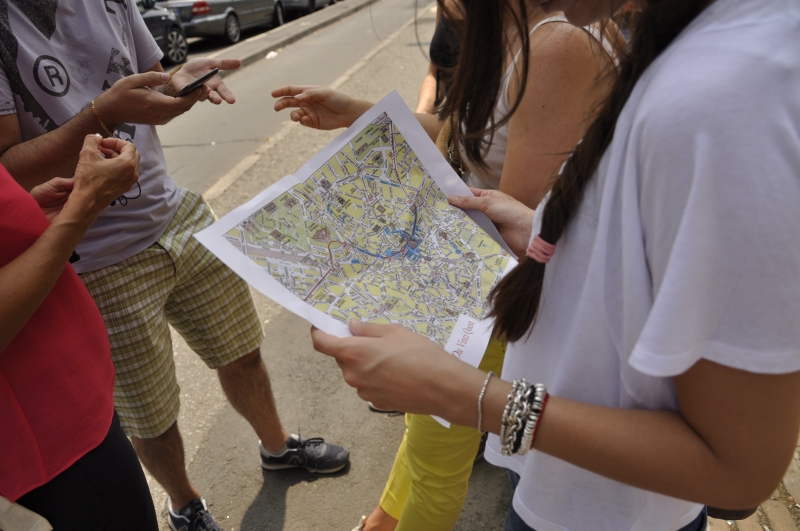
GPS Hunting is one of the most widely used formats in this field, and it is an activity that is regularly designed and delivered within our initiatives for corporate teams. Teams receive a briefing, maps and GPS devices, and are then asked to track a moving target across Italian cities, including Milan, where several programmes have been developed.
In such activities, strategy becomes essential, as groups split responsibilities and adjust plans as new information arrives. The structure changes continuously, and coordination therefore depends on how quickly teams adapt rather than on predefined roles.

Mystery room and collective reasoning
Mystery room experiences place teams in a controlled environment where they are required to solve a structured scenario using clues, coded messages and progressively complex puzzles.
The objective is achieved through collaboration rather than individual reasoning, which is why different working styles emerge naturally, with some participants focusing on detail and others on speed or pattern recognition. Errors are common and are often corrected collectively, becoming part of the process itself rather than an interruption.

Treasure hunts and group dynamics
The team building treasure hunt remains a widely used format because of its simple structure and immediate engagement. Teams are divided into groups and asked to complete quizzes, riddles and challenges in order to reach a final objective, although the activity involves more than it may initially suggest.
In practice, while the tasks appear straightforward, time pressure significantly changes the dynamic. Information is processed quickly as responsibilities are distributed informally, and coordination becomes increasingly instinctive as the activity progresses, allowing participants and the group as a whole to develop problem solving skills.
Smart workers and remote collaboration formats
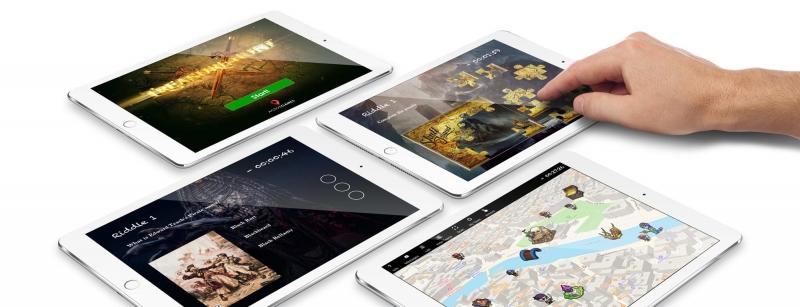
Digital team building formats such as Smart Workers challenges extend problem solving activities into remote environments. Participants use smartphones or tablets to complete missions that combine virtual tours and interactive tasks, while teams accumulate points through progressive challenges.
The results are shared in a final video conference that includes a recap and recognition of the winning group. Even in remote conditions, collaboration patterns and decision-making behaviours remain clearly observable.

What companies evaluate through these activities
Across all formats, companies observe how teams respond when conditions are uncertain and instructions are not fully defined.
The focus goes beyond engagement, shifting towards decision making and adaptability in real-time situations, as problem solving team building reproduces, in simplified form, the dynamics teams encounter in everyday work contexts, where clarity is often partial and coordination tends to matter more than individual performance.