
Social team building and its evolving meaning
Somewhere between corporate volunteering and traditional team activities, social team building has quietly taken on a different weight. It is no longer perceived as a pleasant add-on, something to fill a calendar slot between meetings and quarterly reviews. It carries substance now. A certain gravity.
At its most authentic core, this form of team building consists of collective activities shaped around a social or environmental purpose. Teams may spend time volunteering at a food bank, contributing to the regeneration of a community garden, assembling support kits for local charities, or offering mentoring sessions based on professional expertise to non-profit organisations. The structure varies, sometimes significantly, yet the direction remains consistent. What distinguishes these practices is not their format but their outward orientation. The group works towards a goal that extends beyond corporate boundaries, creating a tangible, if modest, impact on external communities. That shift, subtle on paper, changes everything in practice.

A measurable impact on employee engagement and retention
There is data behind the intuition. According to a 2024 Deloitte study, 87 percent of employees consider corporate volunteering opportunities a relevant factor when deciding to remain with their employer, while 91 percent recognise that such initiatives positively influence their overall work experience and sense of belonging.
Those figures are difficult to ignore and suggest that social team building is not simply about goodwill or reputation. It touches something more structural, almost foundational, within organisational life.

Employees tend to interpret these initiatives as signals. Not loud ones, not performative, but consistent indicators that the company’s declared values might actually translate into action. And that, in a professional environment often dominated by metrics and outputs, carries unexpected weight.
Building trust through shared purpose
The internal effects are perhaps less immediate, yet no less significant. When colleagues engage together in an activity directed towards a social outcome, the dynamic within the group shifts in ways that are not always easy to quantify.

Trust develops differently, becoming less transactional and less tied to roles or hierarchies. Working side by side in a context removed from usual corporate routines introduces a kind of levelling effect. Titles recede. Interactions become more direct.
Volunteering, in particular, tends to generate emotional connections that extend beyond the workplace itself. Relationships form not only between colleagues, but also between the team and the community they engage with, and even, in a more abstract sense, with the values the organisation claims to represent. It gives the working environment a slightly altered texture. More human, perhaps. Less procedural.

Skill development beyond conventional training
There is also a practical dimension, often underestimated at first glance. Social team building creates conditions in which transversal skills emerge almost incidentally, yet quite effectively.
Project management comes into play when coordinating activities with external organisations. Communication evolves in environments where clarity and empathy matter equally. Leadership appears in unexpected places, sometimes in individuals who remain quieter within formal corporate settings.
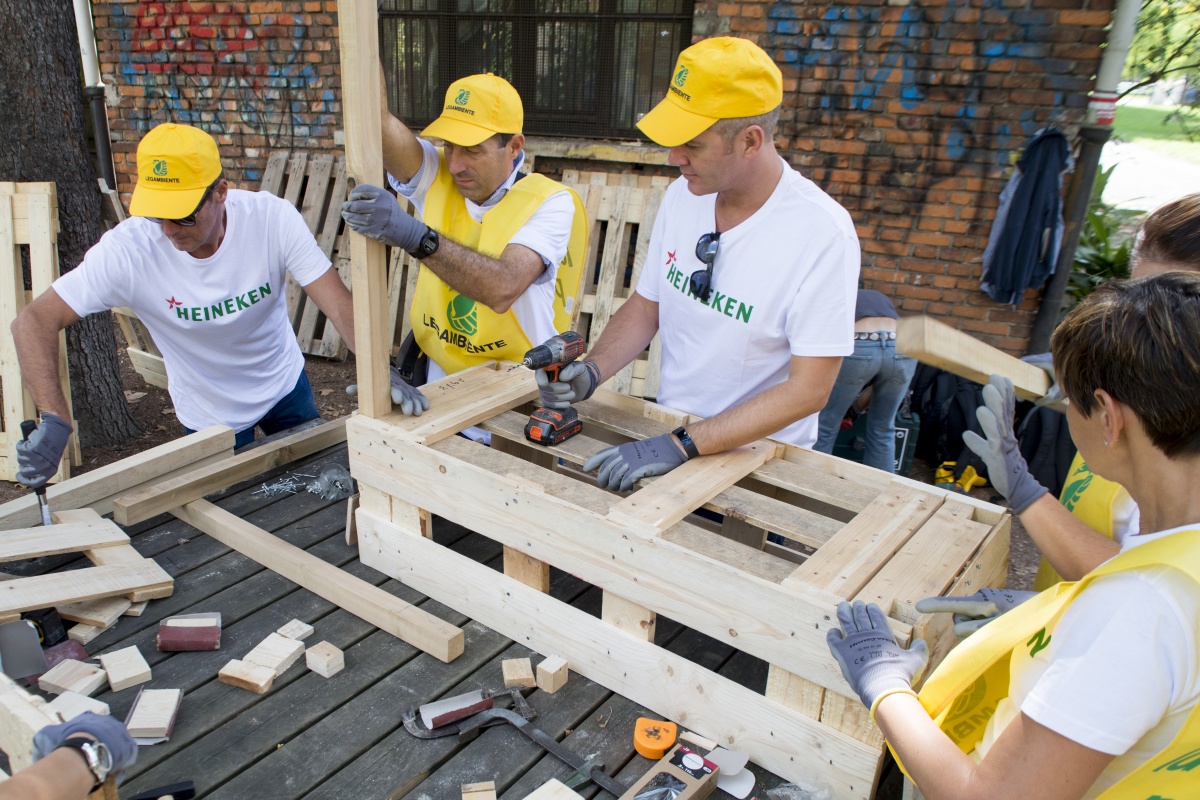
Teamwork, of course, sits at the centre of it all, though it takes on a different tone. It becomes less about task completion and more about collective contribution. That nuance, small as it may seem, tends to produce lasting effects.
Research published by the Deloitte in 2024 highlights how these experiences contribute to both personal and professional development, reinforcing the idea that learning does not always require structured training programmes.
The double return for organisations
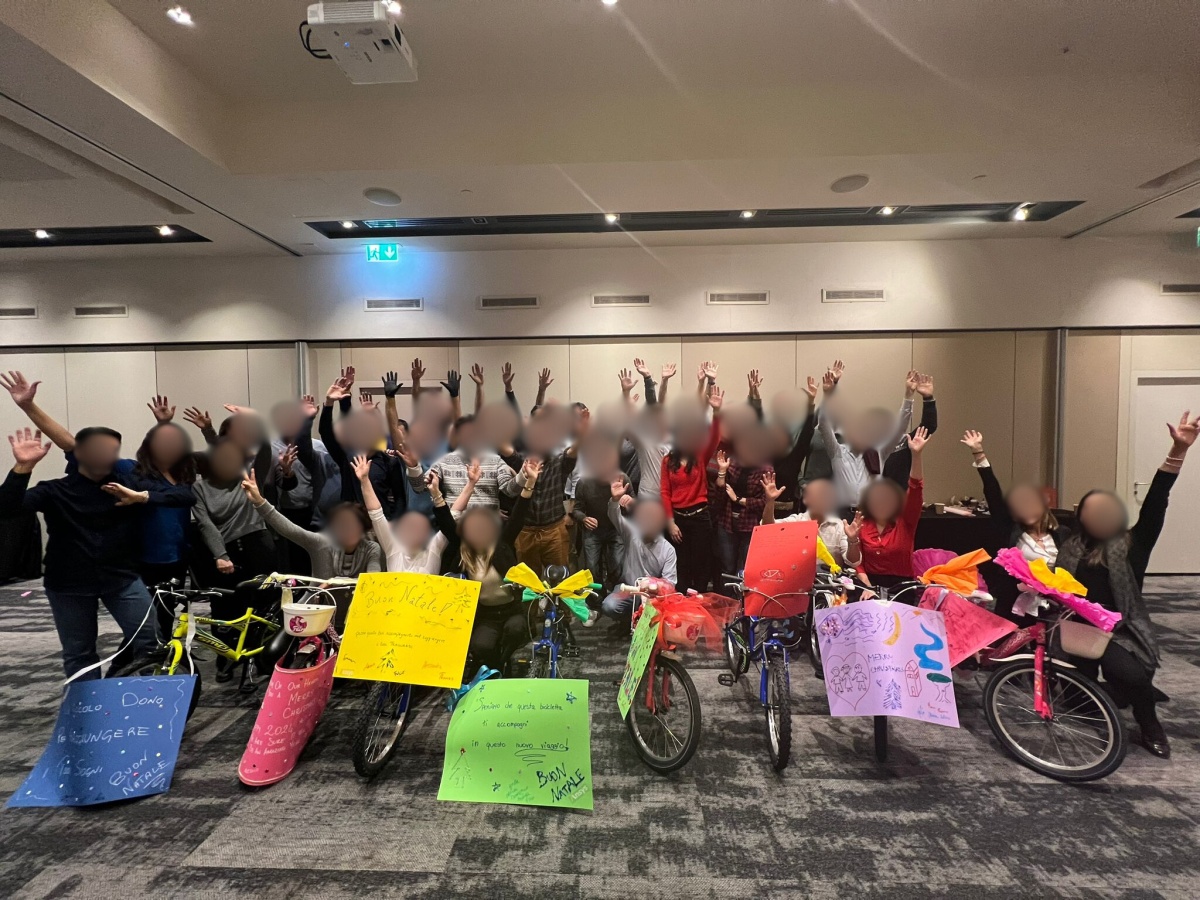
It might feel reductive to describe the outcome in purely economic terms, yet the notion of a “double return” captures something essential. On one level, companies benefit internally through stronger cohesion, higher engagement, and improved retention. On another, they generate external value, however limited in scale, by contributing to social or environmental initiatives.
This dual effect distinguishes social team building from more conventional formats and introduces a layer of meaning that standard activities often lack. It does not replace them entirely, nor should it, but it adds a dimension that reshapes their purpose.
There is, admittedly, a delicate balance to maintain. When these initiatives appear overly staged or disconnected from genuine intent, their impact diminishes rather quickly. Authenticity, in this context, is not a rhetorical device. It is a prerequisite.

When purpose becomes part of company culture
Over time, organisations that integrate social team building into their broader strategy tend to notice a gradual shift. Not dramatic, not immediate. Subtle, cumulative.
Employees begin to associate their work with something slightly larger than day-to-day responsibilities, and teams develop a shared memory of experiences that sit outside the usual performance framework. The company itself acquires a different kind of presence, both internally and externally.
It does not solve everything. It was never meant to. Yet it introduces a dimension that feels, in many cases, unexpectedly relevant. And perhaps that is precisely the point.