
Outdoor team building ideas that reshape collaboration beyond the office walls
Outdoors, group dynamics shift away from formal organizational structures, taking on the form of living systems that respond to the pace of action and to unexpected events—events that may not occur in the same way in an office setting, but that nonetheless stimulate problem-solving.
Outdoors, group dynamics shift away from formal organizational structures, taking on the form of living systems that respond to the pace of action and to unexpected events—events that may not occur in the same way in an office setting, but that nonetheless stimulate problem-solving. Outdoor team building carries that peculiar shift in atmosphere where hierarchy softens a little and communication becomes less scripted, more immediate, sometimes even improvised in ways that surprise the participants themselves.
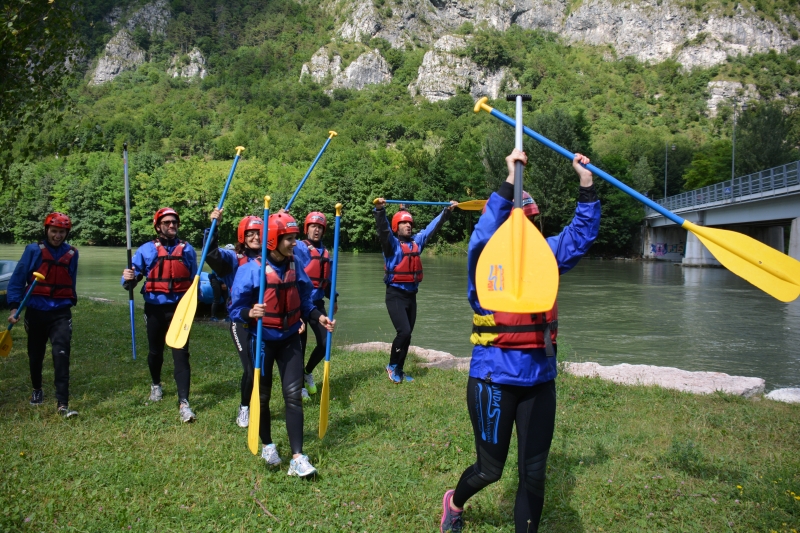
Why outdoor team building changes group dynamics
Outdoor team building creates conditions where collaboration stops being abstract and becomes physical, visible, as people negotiate tasks under open skies. Studies on experiential learning suggest that shared challenges in non-office environments can strengthen trust and improve communication patterns, particularly when participants are required to solve problems collectively under mild pressure.
There is also something about nature, shifting weather, and the absence of familiar screens that disrupts routine thinking… not dramatically, but enough to tilt behaviour.
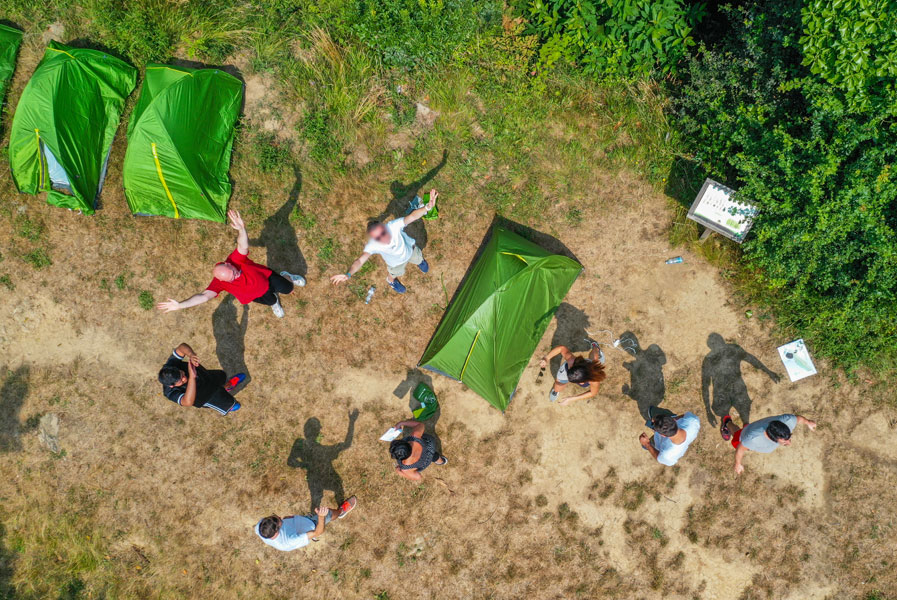
Outdoor team building ideas inspired by nature and challenge
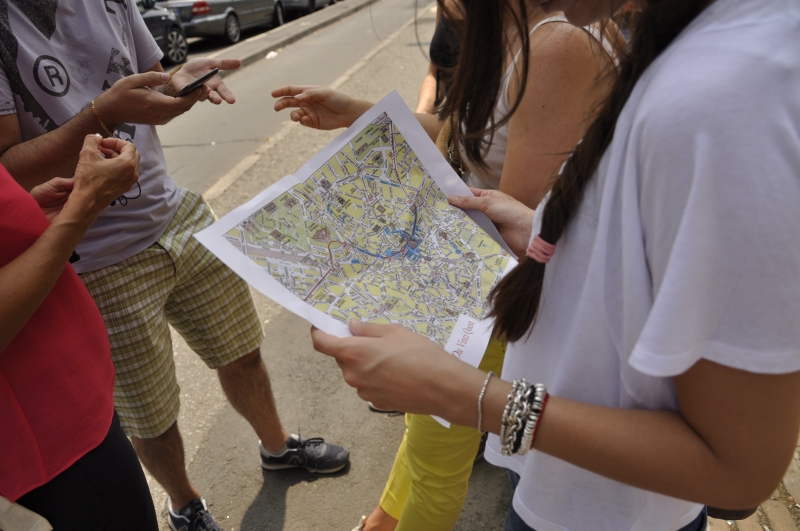
Forest navigation games and river-based problem solving, alongside urban exploration routes with layered clues, each activity works as a different lens on cooperation. A well-designed programme might include rope-based trust exercises, collaborative map reading, or creative survival scenarios where teams must allocate limited resources, often under constraints that shift as the exercise unfolds.
The most effective outdoor team building ideas tend to avoid overcomplication, since simplicity reveals complexity in human interaction. A task like transporting objects across a natural obstacle becomes a quiet study in leadership shifts, with negotiation unfolding in response to what others are doing, while timing ends up depending on when the group collectively stops trying to control every step.
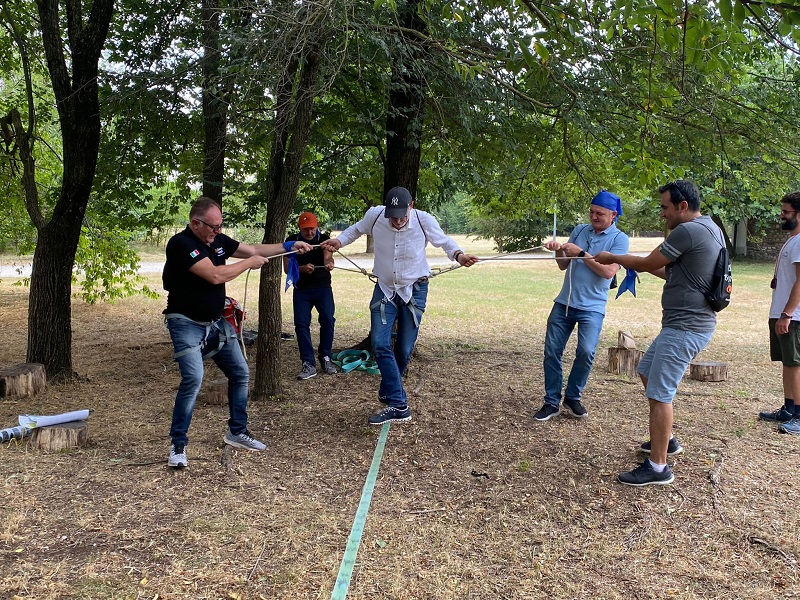
Designing an effective outdoor team building experience
A carefully planned experience begins with a clear definition of objectives, ranging from strengthening communication to improving cross-functional trust, and in some cases it is simply about resetting group energy after intensive project cycles.
Location selection plays a decisive role, often more than the activity itself. A forest reserve near urban access points may steer the experience in one direction, while alternative environments such as coastal areas or repurposed rural estates introduce different constraints that only emerge once the group is already in motion.
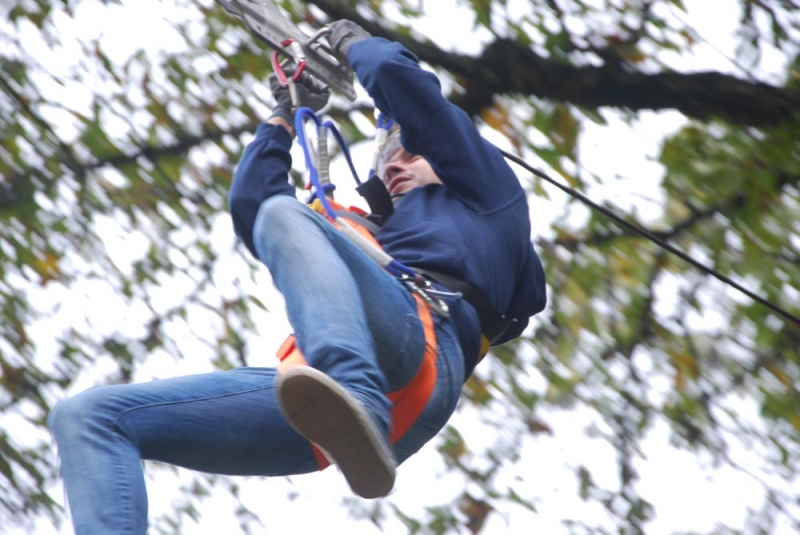
Transport timing and equipment distribution tend to matter most, while logistics as a broader framework influences how smoothly the day unfolds, often in ways participants notice only in retrospect, if at all.
Safety considerations sit alongside the rest of the planning process rather than appearing as a final checkpoint, with risk assessments, weather contingency planning and basic medical readiness forming a structural backbone that supports any responsible outdoor programme, in line with established guidelines such as those provided by the Adventure Travel Trade Association.
Creative formats that go beyond conventional exercises
Some organisations now experiment with hybrid storytelling challenges, where teams build narratives while completing physical tasks, almost like live-action strategy games with shifting objectives. Others integrate sustainability themes, asking groups to solve environmental puzzles tied to local ecosystems.
There are also quieter formats, slow-paced walking collaborations designed around reflection and micro-discussions rather than competition. Not every outdoor team building experience needs intensity; sometimes cohesion emerges from shared observation rather than adrenaline.

Practical guidance for meaningful implementation
The description guiding the design of such experiences typically emphasises creativity combined with structure, encouraging organisers to build activities that are original yet grounded in clear operational logic. It suggests starting from a conceptual frame, defining behavioural goals, then translating them into outdoor challenges that remain engaging without becoming chaotic.
Outdoor team building, when designed with intention, becomes less about constructing temporary environments in which collaboration reveals itself under changing conditions, and more about creating contexts that allow participants to return to their usual desks with broader insight.